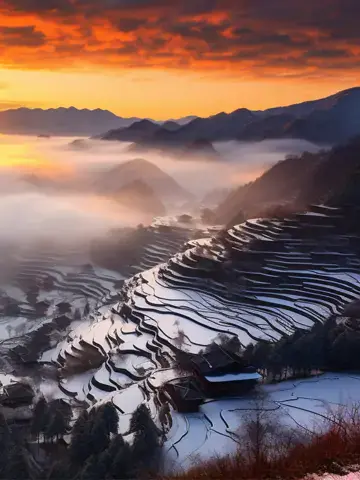
About 22 km from Longsheng County, you can visit the Longsheng rice terraces of China, a layered mountain landscape built from the Yuan to Qing dynasties beside Ping’an Village on Longji Mountain. The site includes Ping’an and Jinkeng Dazhai, with Ping’an rising from 300m to 1100m above sea level, making it a strong choice for travelers who want slow travel, wider views, and a route that feels worth the effort instead of a rushed stop.
The road that leads up feels like a ribbon wrapped around the mountain. The Longji Rice Terraces climb the slope from the riverside to the summit, with the highest point reaching 880 m and the lowest at 380 m. That winding ribbon from foot to peak carves the mountain into seasonal tiers that show mirrored water in spring, fresh green rice shoots in summer, bands of golden rice in autumn, and frost-flecked terraces in winter.
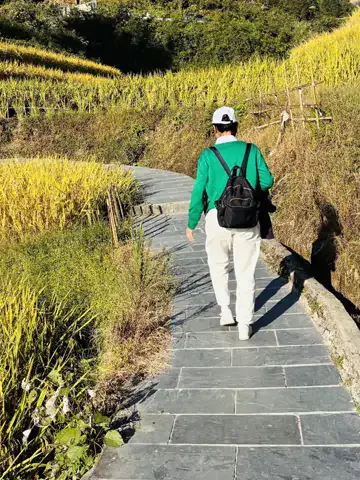
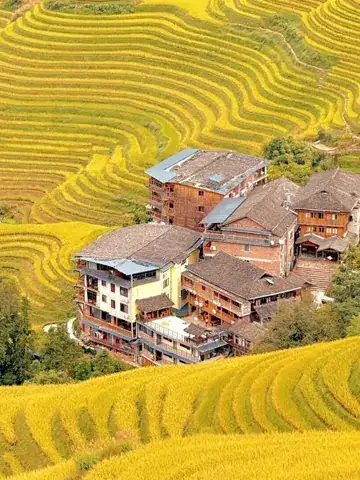
Don’t plan a Longji rice terraces tour from January to March if you expect to see much, as most terraces are empty then. However, from April to May, the paddies are flooded to plant seedlings, creating stunning reflections and water patterns that enhance the beauty. As the season progresses, from June to September, the terraces turn into lush green layers. Later, when rice ripens between late September and early November, the fields glow in golden hues. Walking the paths in autumn offers a close-up view of ancestral farming techniques, giving insight into the labor behind these terraces. Thus, autumn is a perfect time for those who want to connect with local culture and experience the true beauty of the area.
You can hike the stepped trails to get close to the paddies, or take the cable from the foot for an easier visit, which makes it easier to choose the pace that fits you best when you want to hike the Longsheng rice terrace fields. Bring sturdy shoes, because the paths can be uneven, and staying overnight in Ping’an Village gives you a better chance to catch both sunrise and sunset over the terraces while avoiding a rushed day trip.
To get there, take a bus from the Guilin Qintan Bus Station to the Longsheng Bus Station. The fare is about CNY 35 per person. From Longsheng, you can take a local bus to the Longji Rice Terraces.
Geographical Overview: Where to go in Longji Rice Terraces
Longji Rice Terraces lie deep in northern Guilin’s mountains, forming multiple terrace systems over valleys and ridges, each with a distinct mood.
Ping’an Rice Terraces are the most accessible. Trails link main viewpoints, and villages border the fields. This area suits shorter hikes and offers clear views without long distances.
Jinkeng Dazhai Rice Terraces span steeper slopes and broader valleys. The scale is bigger, walks are longer, and scenery expands as you climb. Many visitors explore both areas to see how terraces vary with elevation.
When to visit Longji Rice Terraces
Each season transforms the terraces. In April and May, fields fill with water and create layered mirrors, ideal for morning reflections.
Summer brings green rice shoots and misty views. From June to September, terraces feel alive, though rain and humidity are common. In autumn, from late September to early November, the hills turn gold and walks feel surreal.
Winter is quiet and raw. Some terraces are frosted or bare, but villages remain active. If you want fewer people and cooler weather, winter offers a more local experience.
What to pack for Longji Rice Terraces
Weather shifts quickly in the mountains. Layers are key. A light jacket is useful year-round, especially mornings and evenings.
Good walking shoes are a must. Stone paths become slippery after rain, and trails often have steps, not flat ground. In summer, wear breathable clothing; in autumn and winter, use warmer layers.
Bring water, sun protection, and a small backpack. For overnight stays in villages, pack light, as luggage is carried up stone paths.
How to get around Longji Rice Terraces
The terraces reward slow exploration. From Guilin, buses reach Longsheng, then local transport heads to the scenic area. You must walk from there, part of the experience.
Within the terraces, footpaths connect everything. Some areas have cable cars, but hiking best reveals the scale and rhythm. Distances aren’t great, but elevation changes slow you down.
Plan your route around accommodations and allow extra time. Longji Rice Terraces reward slow travel over tight schedules.