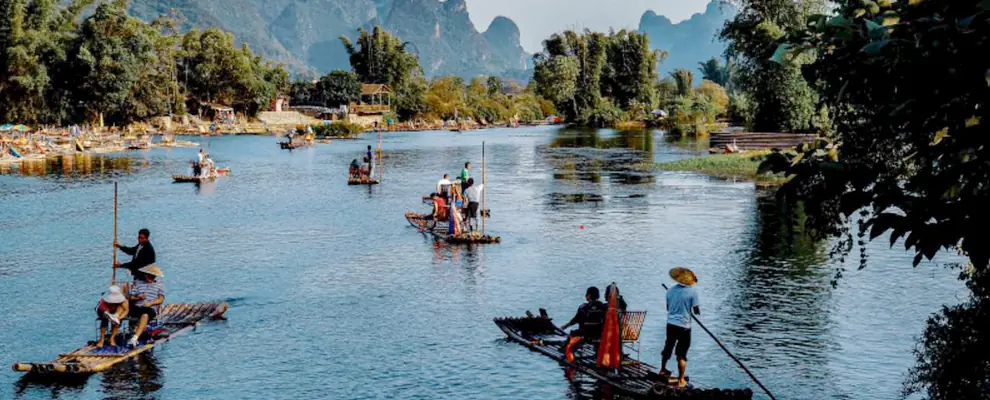
If you are planning to explore yulong river china, this guide helps you choose the right day trip, understand Yulong River bamboo rafting, and avoid the common mistakes that waste time or money. The Yulong River in yulong river yangshuo is a tributary of the Li River, known for its karst scenery, rice paddies, and traditional rafts that locals once used for daily transport. That is why rafting the Yulong River feels slower, calmer, and more local than many travelers expect.
If your goal is to experience a quieter and more authentic side of Yangshuo, Yulong River Scenic Area offers a slower way to connect with nature. The river flows through peaceful countryside, limestone peaks, rice fields, and historic bridges, creating a landscape that feels far from busy tourist routes. Many travelers choose Yulong River rafting, bamboo rafting on the Yulong River, or a yulong river double-person bamboo raft experience because it provides a more relaxed journey with better views, local atmosphere, and practical guidance on safety, timing, and route choices. This guide helps couples, families, and first-time visitors choose the right rafting option and enjoy Yangshuo’s natural beauty without unnecessary planning stress.
For you, that matters because the Yulong River is not just a place to tick off a list. It is a decision point. If you want a slower, more photogenic, less crowded countryside experience, this is where yulong river guangxi china works best. If you want a fast, big-boat style sightseeing option, the Li River is the more obvious comparison. The official Guilin guide shows the Li River cruise is a much longer boat experience, with morning departures from Guilin and fares starting at 480 CNY per adult, while Yulong River rafting is a shorter bamboo-raft experience with separate section pricing.
How to choose the right Yulong River day trip
The easiest route for most travelers is still yulong river yangshuo. The official Yangshuo tour pages show that Yulong Valley is commonly paired with cycling, rafting, and village stops, which makes it ideal if you want to mix bamboo rafting on the Yulong River with a walk, bike ride, or short transfer. If you are building a Yulong River map in your head, think of the river as a flexible countryside corridor rather than one single dock-to-dock ride.
Best for a one-day plan
A Longsheng terrace one-day trip is for another area, but if you are staying in Yangshuo, a Yulong River bamboo rafting day is very realistic in one day. Official tour pages show Yulong River rafting can be included in a 3-day Yangshuo tour and a 3-day Guilin tour, and the Yangshuo version includes rafting plus optional bicycle hire at Yulong Valley for 30 CNY per bicycle. That makes yulong river bamboo raft cost easy to compare with larger tour packages before you book.
Best for a longer Yangshuo stay
If you are staying two to four days, you can split your time between yulong river bamboo rafting price options, village cycling, and sunset viewpoints. The official tours show Yulong River Rafting is often paired with Cuiping Hill, Xianggong Hill, and countryside biking, which tells you the river works best as part of a wider Yangshuo route, not as an isolated attraction. That is why the river sits naturally inside a broader Yangshuo Yulong River plan.
Yulong River bamboo rafting: what it costs and what it includes
The most practical part of planning is comparing the real Yulong River bamboo raft price by route. The official Yulong River rafting page lists 320 CNY per raft for the Jinlong Bridge to Jiuxian Village section and 200 CNY per raft for the Shui’e di to Wanjing Pier section. It also says rafting runs from 8:00 am to 5:00 pm, and that pregnant women, children under 1 meter, and people over 70 with certain health conditions are not allowed to board. Life jackets are required.
Route or option
Price
Time or note
Best for
Source
Jinlong Bridge to Jiuxian Village
320 CNY per raft
Stronger sightseeing section
Travelers who want the fuller yulong river bamboo raft rafting experience
If you are comparing yulong river bamboo raft cost against a Li River cruise, the difference is clear. The Li River boat is priced per adult and runs as a longer cruise, while the Yulong experience is smaller-scale and more flexible. That is one reason travelers who want quieter scenery usually choose bamboo rafting along yulong river instead of a bigger cruise product.
Safety tips before you go
The safest approach is to treat bamboo rafting on the Yulong River as a scenic activity, not a water-sports free-for-all. Wear the life jacket, keep your phone protected, and do not try to force extra activity into the day. The official rafting page is explicit about the safety restrictions, and that is the part many first-time visitors miss when they search for Yulong River bamboo rafting or Yulong River scenic drifting and focus only on the views.
If you are looking at swimming in yulong river, think twice. The standard visitor experience is rafting, not swimming, and the river is better enjoyed from the raft or from riverside paths. In practical terms, the safest and most rewarding choice for most travelers is to stay on the raft, keep the day relaxed, and use the river as a photography and countryside experience instead of a swim stop.
A simple safety checklist
Use a local map before you go. The official cycling guidance for the Yangshuo countryside says a local map is highly recommended, and that advice also works for yulong river map planning because it helps you choose the right dock, bridge, and village combination without wasting time. That matters most if you want Yulong River rafting plus cycling or a short village walk on the same day.
What to do beyond bamboo rafting
Most travelers know yulong river bamboo rafting, but the river is more than one activity. The official Yangshuo pages point to cycling in the countryside, the Yulong Valley, Jiuxian Old Town, and other nearby viewpoints, all of which sit naturally inside a longer Yulong River travel plan. If you want a richer itinerary, pair the raft with cycling, a village stop, or a sunset viewpoint instead of trying to race through the area.
You can also compare yulong river park style stops and rural viewpoints against the raft experience. The river corridor is a good fit for travelers who want a slower day, especially if your goal is photography, light hiking, or rural exploration in yulong river valley china. In the official Yangshuo tour examples, the Yulong Valley is often paired with cycling and walking, which is exactly what makes it useful for travelers who want more than a simple raft ride.
Day-trip comparison: what is worth your money
If you are deciding between a Yulong River cruise, yulong river dragon boat listing, or a standard bamboo raft, read the product details carefully. The official Yulong River activity is bamboo rafting; the feeling is calm and rural, not theatrical. That is why yulong river bamboo rafting price should be judged together with route length, safety rules, and whether the trip includes bike hire, guide time, or other Yangshuo highlights.
When travelers book day trips, they often compare platforms as much as destinations. GetYourGuide currently shows a TrustScore of 4 out of 5 based on about 52,000 reviews, while Viator shows a TrustScore of 4.5 out of 5 based on more than 323,000 reviews. Recent Trustpilot comments on both platforms often mention helpful local guides and easy booking, which matters if you want a smoother Yulong River bamboo rafting booking experience and do not want to spend your trip solving payment or pickup problems.
Mistakes to avoid
Do not assume every listing with the word “Yulong” is the same product. Some tours are raft-only, some combine biking and viewpoints, and some add other stops like Cuiping Hill or Xianggong Hill. The official Guilin and Yangshuo tour pages make it clear that Yulong River bamboo rafting can be sold as a standalone experience or bundled into a longer private tour, so you should always check whether the price is per raft, per person, or per package.
Also, do not plan your whole day around one dock. The river works best when you give yourself room for a bike ride, a slow lunch, and a village stop. That is the difference between rushing through yulong river yangshuo china and actually feeling like you spent time in the Yulong River Scenic Area.
Conclusion
For planning checklists and route notes, see Travel Resources. For a deeper local overview of the river itself, see Yulong River.If you want a day trip that feels calm, photogenic, and genuinely local, yulong river china is one of the best choices in Yangshuo. The best version of the trip is usually the simplest one: pick the right rafting section, check the rules, keep your day flexible, and add a short bike ride or village stop if you want more than bamboo rafting yulong river alone. With the right plan, rafting the Yulong River becomes less about ticking off an attraction and more about spending time in the landscape the way locals and repeat visitors remember it.
FAQ
1.What is the best time to visit Yulong River?
Go Apr–Jun or Sep–Oct mornings for soft light at dawn!
2.How much does Yulong River bamboo rafting cost?
Yulong River bamboo rafting cost: expect ¥60-150 pp; you book sunrise slots, bring cash, raincoat!
3.Is Yulong River bamboo rafting safe?
You can, with licensed raftsmen, avoid nights, wear a life vest, ok.
4.How do I get to Yulong River from Yangshuo?
From Yangshuo, you reach Yulong River by bike (30-60min), taxi (15-30min), or shuttle!
5.Do I need to book Yulong River rafting in advance?